
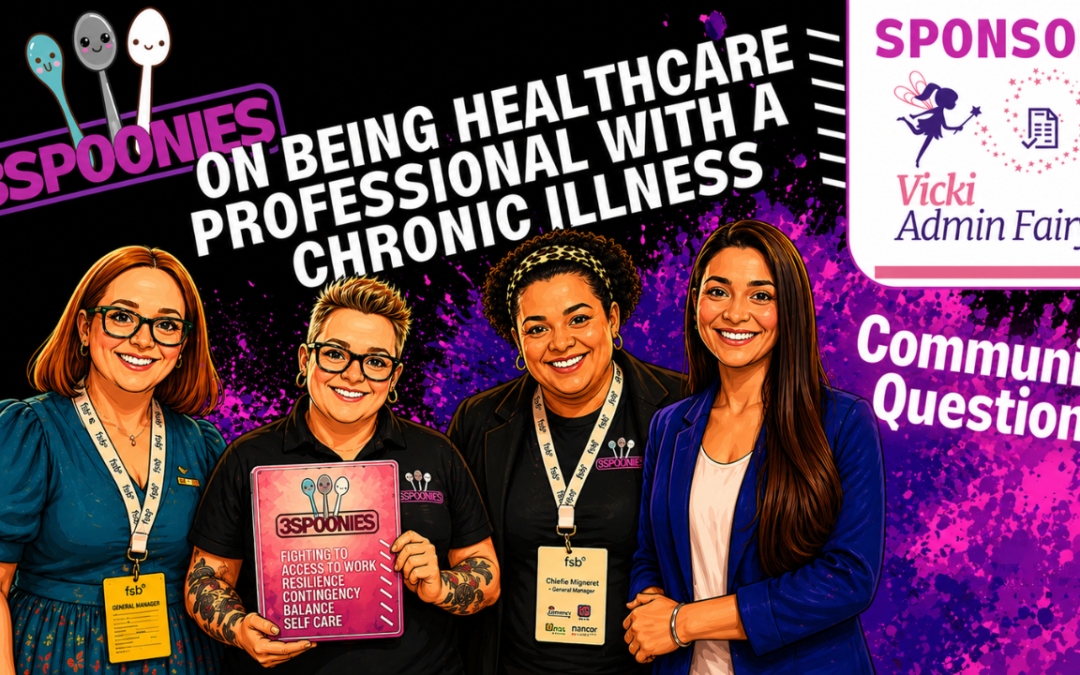
What happens when you’re navigating your own health while working inside the healthcare system? How do you balance privacy, professionalism and practicality when your needs don’t fit neatly into workplace expectations?
In this Community Questions episode of 3Spoonies, we’re joined again by Shelley Gautam to answer real questions from people working in healthcare while managing chronic illness.
Find out more about Shelley here.
As always, the answers aren’t black and white. But they are honest, practical and grounded in lived experience.
Should You Have Surgery Where You Work?
The first question tackled something many healthcare professionals quietly worry about: if you need surgery, is it better to have it done at your own workplace or go somewhere else?
The answer, perhaps frustratingly, is that it depends.
Shelley highlighted two key factors to consider. The first is your relationship with your colleagues. If you feel safe, supported and comfortable in your workplace, having surgery there could actually be beneficial. You already know the systems, the people and how things work, which can make an already stressful situation feel more manageable.
The second is convenience. When you’re unwell, reducing extra stress like travel, unfamiliar environments and logistics can make a huge difference.
However, if maintaining privacy feels more important, or if workplace dynamics are more complicated, going to a different hospital might be the better choice. It ultimately comes down to what will make you feel most comfortable and supported during recovery.
Asking for Workplace Adjustments
The next question focused on uniform policies, specifically footwear, and what to do when workplace rules conflict with medical needs.
Shelley’s advice here was clear and refreshing: this isn’t always something you need to ask permission for.
If you have medical evidence, this is about communicating a requirement, not negotiating a preference. Rather than framing it as a request, it can be more effective to say, “This is what I need in order to do my job safely and effectively,” and provide supporting documentation.
Another important point raised in the conversation was not to take on the responsibility of advocating for everyone at the same time. While wider change is important, when it comes to your own health, the priority is making sure your needs are met first.
When Health Needs Become Visible
The final question explored a more emotional and nuanced situation. What do you do when workplace accommodations make you feel singled out?
In this case, a listener with a latex allergy was uncomfortable with their name being written on boxes of latex-free gloves. While the intention was helpful, it made them feel exposed.
This sparked a really thoughtful discussion around visibility, privacy and practicality.
On one hand, clearly labelling items can prevent others from accidentally using them, which is important for safety. On the other, being singled out can feel uncomfortable, especially in environments where you may not want to share personal health details.
One potential solution discussed was involving management. A general message or reminder to the team about the purpose of specific equipment could remove the need to single out an individual while still protecting their needs.
Ultimately, like many of the questions in this episode, the answer comes back to personal comfort and workplace dynamics. There isn’t a one-size-fits-all approach.
It Depends — And That’s Okay
One of the strongest themes throughout this episode is that there often isn’t a perfect answer.
Instead, it’s about weighing up factors like:
- your health needs
- your workplace environment
- your relationships with colleagues
- your energy levels
- and your personal boundaries
What works for one person may not work for another, and that’s completely valid.
Final Thoughts
Working in healthcare while managing a chronic illness comes with unique challenges. You’re navigating systems you understand professionally while also trying to protect yourself personally.
This episode is a reminder that:
- your health needs are valid
- you are allowed to set boundaries
- you don’t have to justify everything
- and sometimes the best decision is simply the one that makes your life easier
If you’re facing similar situations, you’re not alone — and there are ways to make work fit around your health, not the other way around.
Find out more about our guest, Shelley, here.
Listen to the Episode
Search “3Spoonies Episode 64.5 – Healthcare Workers with Chronic Illness Community Questions” on your favourite podcast platform or YouTube. Or find the main ways to watch and listen here.
About 3Spoonies
3Spoonies is a podcast about disability, business, wellbeing and everyday life — honest conversations from people navigating the world with not enough spoons.
If you’d like each new episode straight to your inbox then join our mailing list.