
Breaking into the television industry can feel difficult for anyone. If you are disabled or managing health challenges, it can feel even more complicated.
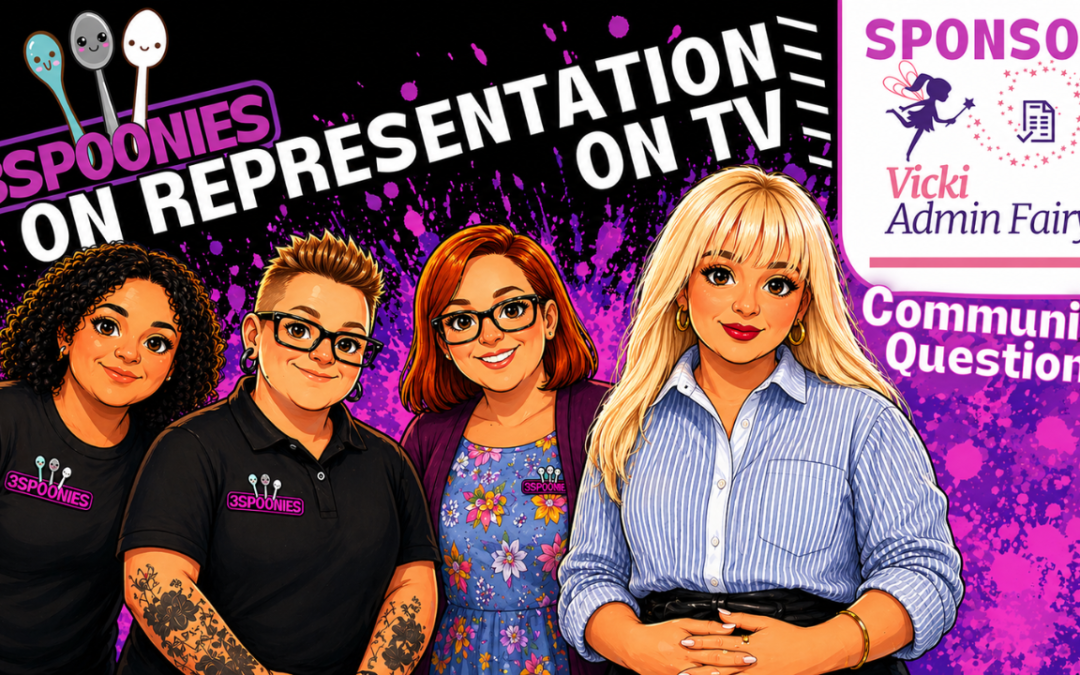
In Episode 62.5 of 3Spoonies, we welcomed back Samantha Renke to answer community questions from students about careers in TV, acting, editing and scriptwriting.
Find out more about Samantha here.
The result was a practical, honest and encouraging conversation packed with useful advice for anyone hoping to work in media.
There Is No One Route Into TV
One of the strongest messages from Samantha was that there is no single path into the industry.
Drama school can be a brilliant route for some people, but it is not the only option. Community theatre, volunteering, local radio, social media content, interviewing people, public speaking and saying yes to opportunities can all help build confidence and experience.
The traditional route is only one route.
Use Social Media as a Practice Space
Samantha talked about how younger people now have something many previous generations did not: the ability to create their own platform.
TikTok, Instagram, YouTube and other platforms can help you:
- get comfortable on camera
- improve confidence
- practise presenting
- test creative ideas
- build an audience
- showcase personality and talent
You do not need permission to start creating.
Behind-the-Scenes Roles Matter Too
Not everyone wants to be in front of the camera.
The episode also explored careers such as editing, production and other behind-the-scenes roles. Samantha highlighted that disabled people belong in every part of the industry — not just on screen.
Representation is not only about who appears in front of viewers. It is also about who gets hired, promoted, listened to and supported behind the scenes.
Ask for What You Need
A key part of the discussion was reasonable adjustments.
Whether someone needs flexibility, extra time, accessible locations, adapted equipment or different working methods, asking for support is not asking for too much.
It is asking for the conditions needed to do good work.
Samantha also spoke honestly about how difficult boundary-setting can be, especially when opportunities feel rare. Many disabled people know the fear of speaking up and losing work.
But long term success usually depends on sustainable ways of working.
Writing Disabled Characters Authentically
Another listener asked whether writers can create disabled characters if they do not share that disability themselves.
Samantha’s answer was thoughtful: yes, but only with care, consultation and respect.
That means:
- speaking to disabled people
- researching properly
- avoiding stereotypes
- focusing on the person, not just the condition
- involving disabled voices in the process
Disabled characters should feel human, layered and real.
Confidence Often Comes After Starting
One reassuring theme throughout the episode was that confidence is not usually something you wait for.
Confidence often arrives after:
- trying
- practising
- getting things wrong
- learning
- showing up again
Many careers begin before people feel fully ready.
Final Thoughts
This was an inspiring episode in the most grounded sense of the word.
Not “follow your dreams and everything will be easy.”
But: there are routes in, skills can be built, and disabled people deserve space in every part of the creative industries.
If you want to work in TV, media or storytelling, there is room for your voice.
Find out more about Samantha here.
Watch / Listen to Episode 62.5
Search 3Spoonies Episode 62.5 – Community Questions on TV Representation with Samantha Renke on YouTube and podcast platforms. Or find the main ones here.
About 3Spoonies
3Spoonies is a podcast about disability, business and life from three hosts navigating the world with not enough spoons — with honesty, humour and real conversations.
If you’d like all new episodes straight to your inbox then join our mailing list.