
Is it worth getting an autism diagnosis later in life?
What do you do if someone uses language about themselves that feels uncomfortable?
And is it okay to ask people to use more accurate terms for your condition?
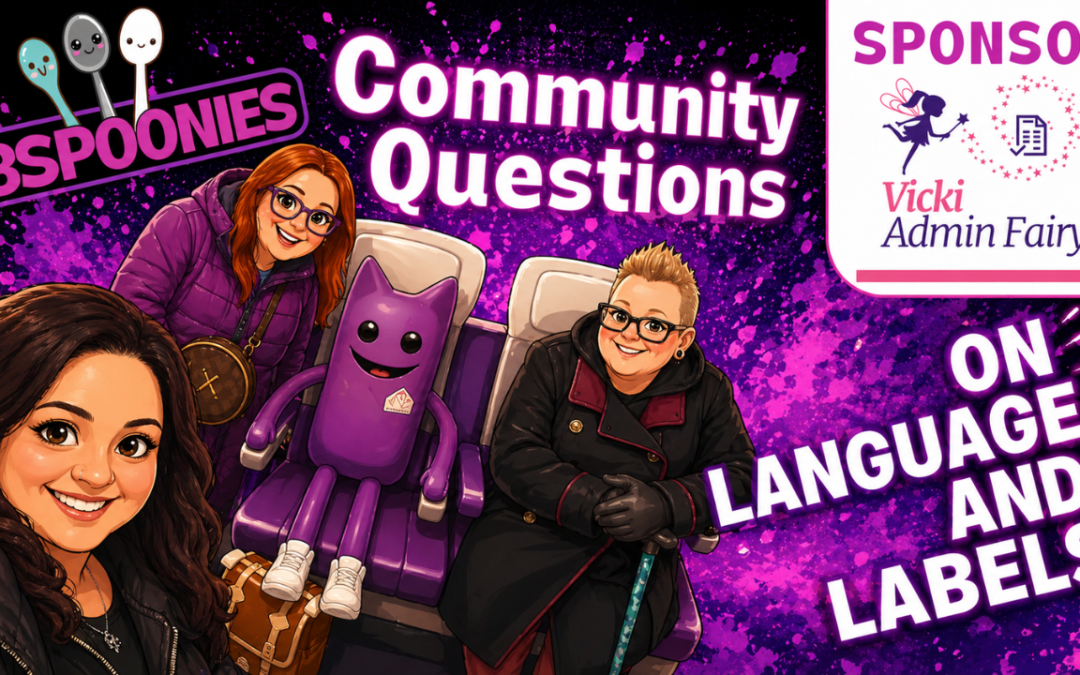
In this Community Questions episode of 3Spoonies, we answer listener questions around autism diagnosis, disability identity, language and the sometimes complicated relationship people have with labels.
The discussion covers late diagnosis, self-understanding, reclaiming language and how to approach difficult conversations with empathy.
Is It Worth Getting an Autism Diagnosis in Adulthood?
The first question came from a listener diagnosed with ADD years ago who wondered whether pursuing an autism diagnosis in their 30s was still worthwhile.
The short answer from the team?
Yes.
The conversation explores how many people — especially women — are diagnosed much later in life after years of masking, misunderstanding symptoms or simply not fitting older diagnostic models.
Jo highlights that later diagnosis can sometimes become important for medical reasons too, particularly as research and awareness continue to grow around links between neurodivergence and life stages such as menopause.
Karen points out that while your 30s can feel “late”, many people receive diagnoses much later:
- 40s
- 50s
- 60s and beyond
Diagnosis is not always about support services.
Sometimes it is about understanding yourself.
Having language for experiences that never quite made sense can be incredibly powerful.
When Language Becomes Personal
The second listener question explored a difficult situation.
Someone’s sister used an older and potentially insulting term about her own disability.
The listener worried it might be self-criticism rather than reclaiming language.
The group agreed there is no easy answer without context.
Language can mean different things depending on:
- humour
- coping mechanisms
- identity
- comfort
- history
- community
Dark humour, especially in disability spaces, is often a way of processing difficult experiences.
At the same time, if someone seems consistently negative about themselves, it may be worth gently checking in.
Not to police language.
But to understand how they are feeling.
The conversation focused heavily on approaching this with care:
“Are you okay?” often matters more than “Should you say that?”
Reclaiming Language vs Self-Criticism
The episode also touches on the difference between:
Self-deprecating humour
and
self-depreciation
Sometimes people joke because it helps.
Sometimes it becomes a habit.
And sometimes the two overlap.
The important thing is understanding where the language is coming from.
If someone is using humour as a shield, support may matter more than correction.
Is It Okay to Correct Language Around Your Condition?
The final question looked at conditions that have multiple names or changing terminology.
The answer from everyone was clear:
Yes.
You are allowed to ask for accurate language.
Especially when:
- information is being shared medically
- terms have changed
- older language is inaccurate
- similar conditions are being confused
- terminology affects care or understanding
Claire highlighted how important this can be when information moves between healthcare professionals.
Getting the wording right can affect support, treatment and understanding.
Karen also pointed out that some conditions sit under wider umbrella terms while others need more precise descriptions.
More accurate language helps everyone.
Mistakes Are Not Always Malicious
One of the strongest points in the episode is the reminder that not everyone who gets terminology wrong is doing it deliberately.
Sometimes people simply use the language they know.
There is a difference between:
Someone making an honest mistake.
And someone intentionally refusing to listen.
Those situations need different responses.
A gentle correction often works.
Most people are willing to adapt when they understand why language matters.
Labels Are About Understanding
The episode returns again and again to one idea:
Labels should help.
They should support understanding.
Create connection.
Improve communication.
And make life easier.
Not harder.
Whether it is autism diagnosis, disability language or preferred terminology, people deserve the space to describe themselves in ways that feel right.
Final Thoughts
Language is personal.
Diagnosis is personal.
Identity is personal.
And while labels can sometimes feel limiting, they can also provide clarity, community and understanding.
The important part is giving people room to define themselves.
And listening when they tell us what matters.
Listen to the Episode
Search for “3Spoonies Episode 60.5 – Language and Labels: Community Questions” on YouTube or your favourite podcast platform, or click here to find the main ones.