
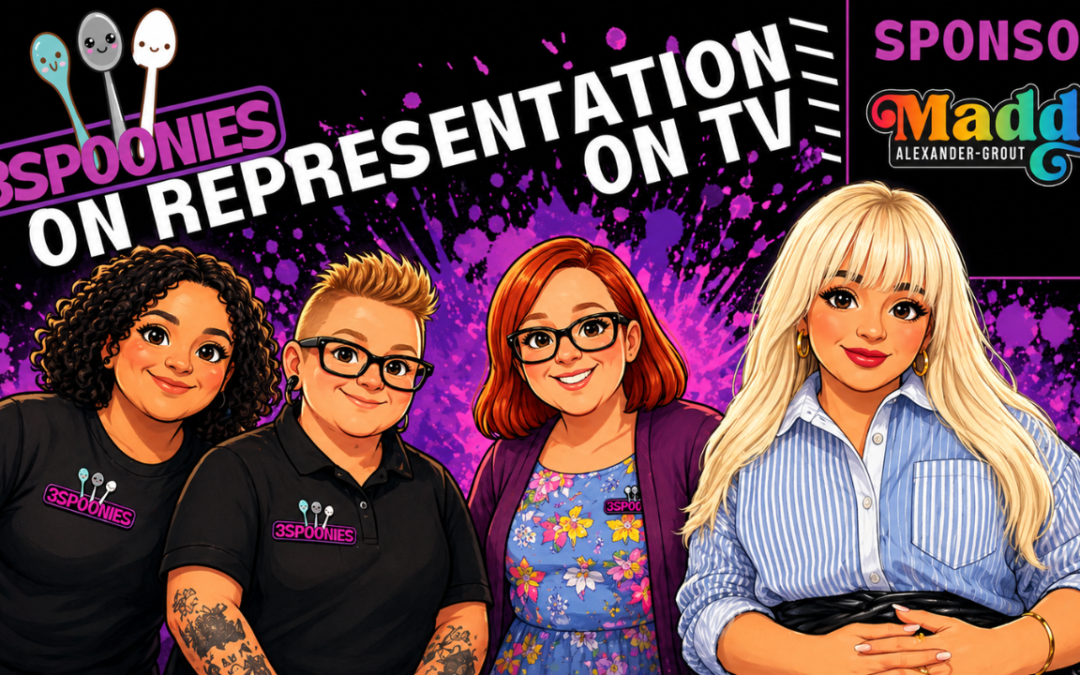
How well does television really represent disabled people in 2026?
That was the big question in Episode 62 of 3Spoonies, where we were joined by actor, broadcaster and disability consultant Samantha Renke for an honest and wide-ranging conversation about disability, media and what true inclusion should actually look like.
As ever with 3Spoonies, we mixed humour, lived experience and blunt honesty.
Find out more about Samantha here.
Samantha Renke’s Journey into Media
Samantha shared how she originally moved to London hoping to work in the charity sector, only to face repeated discrimination and barriers when applying for jobs.
Her route into acting came unexpectedly, eventually leading to award-winning film work and later national recognition through the famous Maltesers advert campaign.
But as Samantha explained, success in the public eye often comes with challenges people never see.
Find out more about Samantha here.
The Reality Behind “Representation”
We explored whether disability representation on TV has genuinely improved, or whether progress has stalled.
Samantha reflected that while there have been visible moments of change, many industries still treat disabled people as a box to tick rather than people to value properly.
Representation without accessibility simply isn’t enough.
A disabled actor or presenter may be hired, but if:
- studios are inaccessible
- transport is difficult
- support staff aren’t available
- auditions ignore disabled people’s realities
- public attitudes remain hostile
…then inclusion is only surface deep.
The Hidden Labour Disabled People Carry
One of the strongest themes in the episode was the invisible work disabled people constantly do.
Planning travel. Managing pain. Navigating inaccessible spaces. Chasing support. Repeating explanations. Managing other people’s assumptions.
Many viewers only see the polished version of someone on screen. They do not see the energy, cost and stress it often took to get there.
Online Abuse and Public Visibility
Samantha also spoke candidly about the backlash she received after appearing in the Maltesers advert.
What should have been a breakthrough moment also brought trolling, cruelty and intense online abuse.
It was a reminder that increased visibility can come with real emotional costs — especially for disabled women online.
Why “Inspirational” Can Be a Burden
We also discussed something many disabled people will recognise: the pressure to always be resilient.
Society often celebrates disabled people for “bouncing back”, staying positive, or being inspiring.
But sometimes people are tired. Angry. Burnt out. Fed up.
And that is human too.
So What Needs to Change?
The conversation kept returning to one truth:
Disabled people do not just need visibility. They need infrastructure, access, empathy and opportunities.
That means:
- accessible buildings
- fair hiring practices
- realistic portrayals in media
- better transport
- proper care support
- listening to disabled voices at every level
Final Thoughts
This episode was funny, sharp and deeply honest.
Samantha Renke brought insight not just as someone who has appeared on screen, but as someone who understands the systems behind it — and the barriers still standing.
If television wants authentic representation, it has to do more than cast disabled people occasionally.
It has to change how it works.
Watch / Listen to Episode 62
Search 3Spoonies Episode 62 – Representation on TV with Samantha Renke on YouTube and podcast platforms. Or find them all here.
If you’d like all new episodes straight to your inbox then join our mailing list.