
Why do some people find bright lights, cluttered rooms or noisy environments exhausting? Why can certain spaces instantly feel calming while others feel overwhelming before you can even explain why?
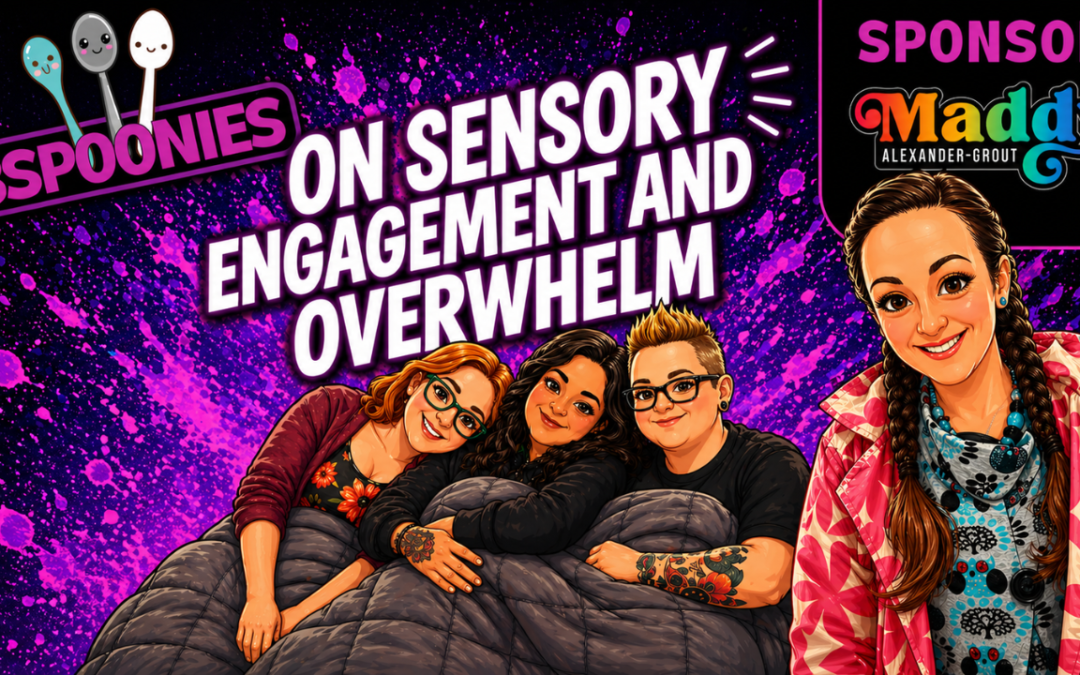
In this episode of 3Spoonies, we’re joined by Dr Joanna Grace to explore sensory processing, sensory overwhelm and the hidden ways neurodivergent people experience the world. Find out more about joanna here.
The conversation dives into autism, ADHD, interoception, shutdowns, meltdowns, mental health, visual processing and why some common wellbeing advice simply doesn’t work for everyone.
What Is Sensory Engagement?
Dr Joanna Grace describes sensory engagement in a very literal way: being connected to the sensory world around you.
That might sound simple, but sensory experiences shape how we access environments, communication, emotions and relationships. For some people, sensory input is simply background information. For others, it can completely dominate their energy, focus and ability to function.
A major theme throughout the episode is that sensory processing differences are not limited to autism. Chronic pain, illness, stress, trauma and fatigue can all affect how people process the world around them.
As Dr Grace explains, everyone has sensory thresholds — and those thresholds can change depending on what’s happening in your body and life.
The Hidden Impact of Visual Clutter
One of the most fascinating parts of the discussion focuses on visual processing.
Many people associate sensory overwhelm with noise, but visual clutter can be just as draining. Dr Grace explains that some neurodivergent people experience “hyper-visual processing”, meaning their brains process far more visual information than neurotypical brains.
She compares it to old televisions constantly checking every pixel on a screen, rather than only updating the parts that change.
That constant processing takes energy.
It also helps explain why:
- cluttered environments feel exhausting
- busy spaces can increase anxiety
- unfamiliar places feel draining
- and why some people feel mentally “fried” after visually busy days
For neurodivergent people, the environment itself can become a constant source of cognitive load.
Why Sensory-Friendly Spaces Matter
Dr Grace shares a powerful story about her autism assessment room — a carefully designed environment that immediately felt calm and safe.
The lighting was soft. There were no harsh visual focal points. The furniture didn’t force eye contact. Even small details, like turning off a plug socket, reduced unnecessary sensory input.
It was the first time she fully realised how demanding most environments had always felt.
The conversation highlights how many modern spaces are designed around neurotypical assumptions, often without considering sensory impact at all.
Interoception: The Sense Most People Never Hear About
One of the most eye-opening sections of the episode explores interoception — the sense that helps people understand what’s happening inside their bodies.
Interoception affects:
- recognising emotions
- hunger and thirst
- temperature regulation
- stress awareness
- and even knowing when you need the toilet
For some neurodivergent people, interoception can be very unreliable. Dr Grace explains that this can make emotional regulation extremely difficult because you may not realise you are stressed until you are already overwhelmed.
This also links directly to shutdowns and meltdowns.
If someone cannot recognise stress building gradually, they lose the opportunity to make adjustments before reaching crisis point.
Why Shutdowns and Meltdowns Happen
The episode explores how sensory overwhelm can trigger fight, flight, freeze and shutdown responses.
When the brain believes someone is in danger — even from sensory input rather than physical danger — it prioritises survival over higher thinking.
That means people can temporarily lose access to:
- memory
- reasoning
- emotional processing
- and language comprehension
This is why telling someone to “calm down” rarely works.
As Dr Grace points out, by the time someone reaches a meltdown or shutdown state, they may physically no longer be able to process reasoning or instructions.
Instead, sensory regulation and reducing environmental demands become far more effective.
Why Mindfulness and CBT Don’t Work for Everyone
Another important discussion centres around neurodivergent mental health support.
Dr Grace explains that approaches like CBT and mindfulness are often based on neurotypical assumptions and may not always be safe or effective for autistic people, particularly those with trauma.
Mindfulness asks people to focus on the present moment — but for some neurodivergent people, the present moment already feels unsafe or overwhelming.
Similarly, CBT assumes harmful thought patterns are the root issue. But neurodivergence is not a thought pattern — it is a neurological difference.
The episode highlights how mental health support for neurodivergent people is still developing, with research only recently beginning to catch up.
The Importance of Sensory Awareness
Throughout the episode, one message keeps coming back: understanding sensory needs changes everything.
That could mean:
- recognising what environments feel safe
- reducing visual clutter
- using sensory supports
- noticing early overwhelm signals
- creating calmer spaces
- or simply understanding that “difficult behaviour” may actually be sensory distress
For many neurodivergent people, sensory overwhelm is not occasional — it is a constant negotiation with environments that were not designed for them.
Final Thoughts
This episode is packed with fascinating science, lived experience and practical insight into how differently people can experience the same environment.
It’s also a reminder that overwhelm is not weakness, overreaction or “bad behaviour”. Sometimes the brain and body are simply processing far more than other people realise.
Understanding sensory processing can help create more compassionate schools, workplaces, healthcare settings and relationships — not just for neurodivergent people, but for everyone.
Find out more about joanna here.
Listen to the Episode
Search for “3Spoonies Episode 61 – Sensory Engagement and Overwhelm” on YouTube or your favourite podcast platform. Or click here to find the main ones.
About 3Spoonies
3Spoonies is a podcast exploring disability, neurodivergence, chronic illness, business and everyday life — honest conversations from people navigating the world with not enough spoons.
If you’d like all new episodes straight to your inbox then join our mailing list.