
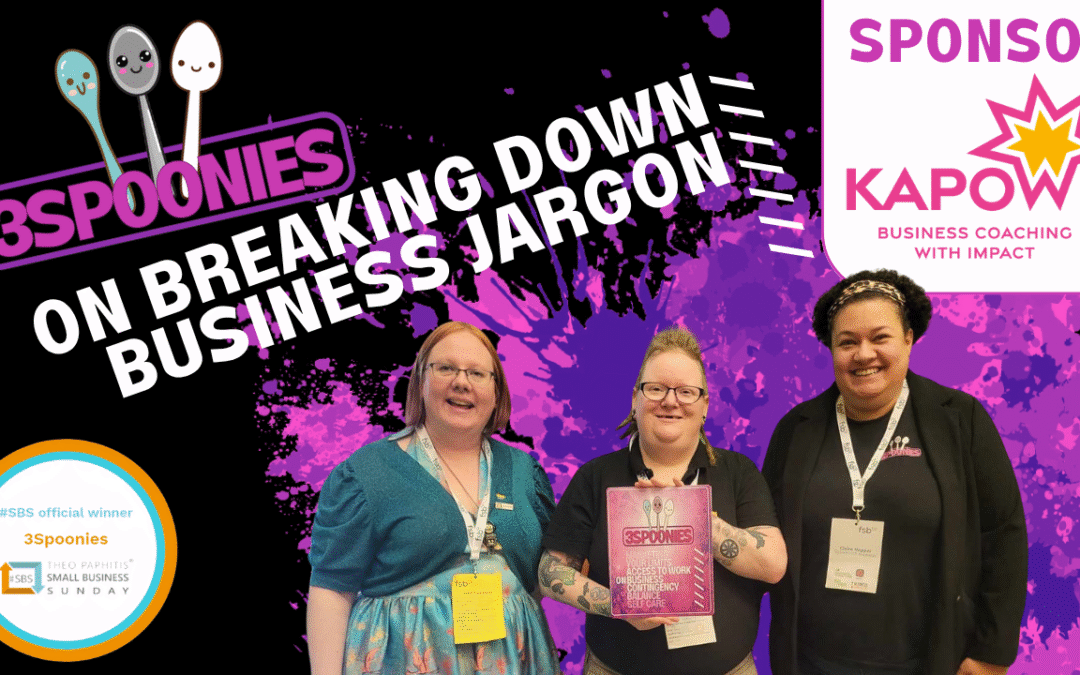
Welcome to 3Spoonies! In Episode 37, your hosts Karen, Jo, and Claire dive into the often confusing world of business jargon, breaking down some of the most bewildering terms and phrases that can leave newcomers scratching their heads. Whether you’re a seasoned business professional or just starting out, this episode is packed with insights into the language that permeates the business world.
Understanding the Jargon
The episode opens with a discussion about the overwhelming amount of business jargon that exists. Jo shares her own experience of being baffled by the term “copy,” which she initially didn’t realise referred to the text on her website. This anecdote sets the stage for a broader conversation about how jargon can be alienating for those new to the business environment.
Common Jargon Misunderstandings
The hosts explore various business terms that often cause confusion:
- Copy: Referring to written text, not just a copywriter’s product.
- TLAs (Three-Letter Acronyms): Common in education and other sectors, often leading to confusion.
- KPIs (Key Performance Indicators): A term that might sound daunting to those unfamiliar with it.
The Impact of Jargon
Karen, Jo, and Claire discuss how jargon can sometimes be used to create an air of exclusivity or expertise. They note that terms like “agile” and “lean” can be overused buzzwords that don’t necessarily convey real meaning. The conversation highlights the importance of clear communication, especially when trying to make a business accessible to those who are new to the field.
Buzzwords and Their Alternatives
The episode also covers some of the most overused business buzzwords and suggests simpler alternatives:
- Synergy: Could be replaced with straightforward collaboration.
- Action Item: Simply refers to a task or to-do.
- Back Burner: A dismissive term for putting something aside, which could be more clearly expressed as “revisit later.”
The Role of Jargon in Business Communication
While some jargon is unavoidable, the hosts emphasise the value of keeping language simple and accessible. They point out that using plain language can prevent misunderstandings and help foster better collaboration and innovation within teams.
You can find all the ways to watch and listen – and find out all the terms that were discussed here.
If you’d like to get each episode straight to your inbox each week then sign up to our mailing list.