
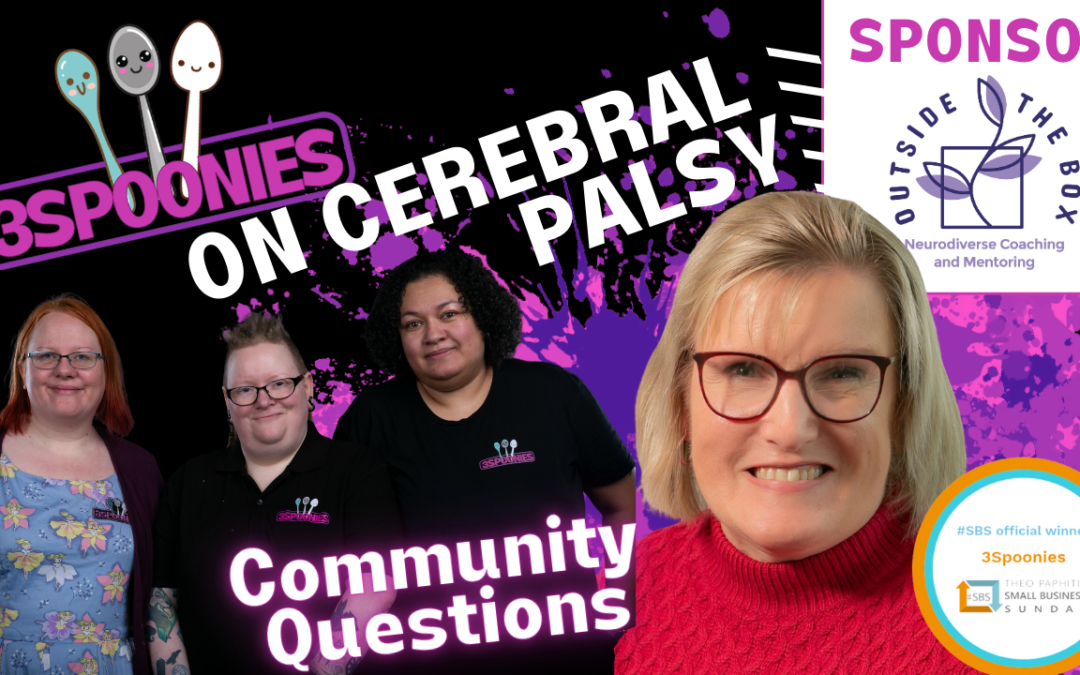
As we wrap up Season 7 of the 3Spoonies Podcast, we’re ending with one of our favourite formats — answering your community questions.
This episode brings back Vicki Wilson, founder of Vicki Admin Fairy, to tackle real-life questions about cerebral palsy, accessibility, working with disability, and navigating professional environments that aren’t always designed with disabled people in mind. You can find out more about Vicki here.
It’s an honest, practical conversation about advocating for yourself, finding sustainable ways to work, and building inclusive environments — whether you’re disabled, self-employed, or working with disabled clients and colleagues.
How to Ask About Accessibility — and Why It Matters
One of the biggest questions raised was how to approach accessibility conversations respectfully.
Accessibility shouldn’t be an afterthought, and it shouldn’t be treated as awkward or inconvenient. Often, people want to help but don’t know what to ask or how to ask it.
The key takeaway is simple: ask openly, listen carefully, and avoid assumptions.
Every disabled person’s needs are different. What works for one person may not work for another, and the best way to understand someone’s access needs is to create space for honest communication.
Accessibility is not about special treatment — it’s about creating environments where everyone has an equal opportunity to participate.
What Happens When Workplaces Aren’t Accessible?
Another important discussion focused on what to do when workplaces or venues become inaccessible.
This can happen gradually — a change in layout, new management, or even just subtle shifts in expectations can make environments harder to navigate.
For disabled professionals, this often means having difficult conversations or making decisions about whether an environment is still sustainable.
Advocating for accessibility is not always easy, but it’s essential. It helps ensure that disabled people can continue working safely, effectively, and with dignity.
It also helps organisations improve and become more inclusive over time.
Disability, Freelancing, and Flexible Working
Freelancing and self-employment can offer disabled people the flexibility needed to work around energy levels, medical appointments, and mobility needs.
For Vicki, running her own business has allowed her to create a work structure that supports her health rather than fighting against it.
Flexibility is often the difference between being able to work sustainably and facing burnout or worsening health.
This flexibility isn’t about working less — it’s about working smarter, with systems that support your body and energy.
Balancing Health, Fatigue, and Professional Life
Fatigue management is a reality for many disabled people and those with chronic illness.
Planning work around medical needs, physiotherapy, or fluctuating energy levels requires constant adjustment.
This doesn’t make disabled professionals less capable — it simply means they may work differently.
Understanding and respecting these differences is essential for creating inclusive professional environments.
Success doesn’t have to follow a rigid, traditional structure.
Disability Rights and the Importance of Advocacy
Understanding your rights is an essential part of navigating professional life with a disability.
Many adjustments that make work possible — flexible hours, accessible venues, remote working — are not unreasonable requests. They are necessary supports that enable disabled people to participate fully.
Advocacy isn’t just about improving individual situations. It helps drive broader change, making workplaces more accessible for everyone.
Every conversation about accessibility contributes to progress.
Building Inclusive Environments Starts With Awareness
One of the strongest messages from this episode is that inclusion begins with awareness, openness, and communication.
Accessibility isn’t just about ramps, equipment, or physical adaptations. It’s about mindset.
It’s about recognising that people work, move, and live differently — and creating environments where those differences are respected.
Small changes can have a huge impact.
Closing Season 7: Community, Advocacy, and Moving Forward
As we close Season 7, this episode perfectly reflects what 3 Spoonies is all about — real conversations, lived experience, and practical insights.
The community questions remind us that accessibility, advocacy, and disability inclusion are ongoing conversations.
There is no single solution, no universal experience, and no one-size-fits-all approach.
But through sharing stories, asking questions, and supporting one another, we can continue to build more inclusive spaces — in business, healthcare, and everyday life. You can find out more about Vicki here.
If you’d like to listen or watch the full episode you can find it here.
and if you want new episodes straight to your inbox then join our mailing list.
If you’ve followed along this season, thank you for being part of the 3 Spoonies community.
Season 8 starts next week.