
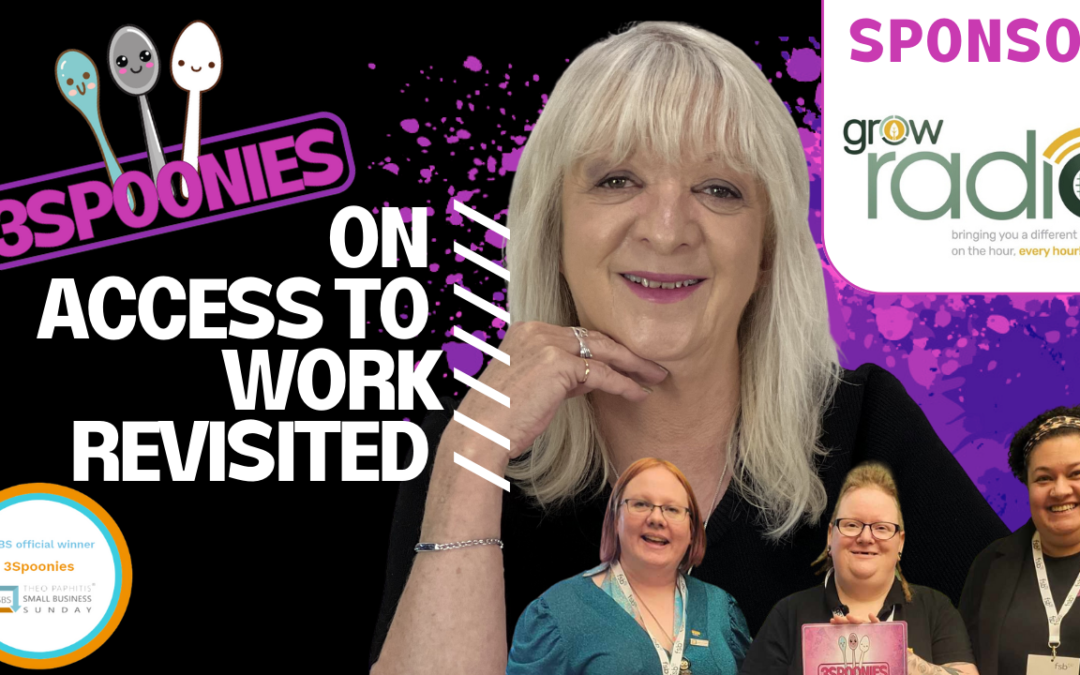
In this insightful episode of the 3Spoonies podcast, hosts Jo, Karen, and Claire are joined by Carol McIntyre, a Virtual Assistant from ExecProVA, to revisit the vital topic of Access to Work. This government scheme aims to provide support for individuals with disabilities or health conditions to help them thrive in their workplace or personal business. Find out more about Carol here.
Understanding Access to Work
Access to Work is a long-standing government initiative, designed over 35 years ago to assist people with disabilities or health conditions. Carol emphasised that while it provides support, it is not intended to fully fund business operations. Instead, it helps with specific challenges, such as specialised equipment, transport costs, and support workers, to promote accessibility in the workplace.
Recent Changes and Developments
Carol shared some crucial updates about Access to Work as of April 2024:
- Increased Grant Cap: The grant cap has been raised to £69,260 per year to keep pace with inflation.
- Streamlined Application Process: The application can now be completed entirely online, simplifying the process and reducing paperwork.
- Support for Flexible Working: Enhanced support for remote and flexible working setups, including updated assessment criteria.
What Access to Work Covers
Access to Work supports various needs, but there are limitations:
- Supported: Specialised equipment, assistive technology, adaptations to standard equipment, support workers, mental health services, and travel costs.
- Not Supported: Standard office furniture and equipment, which are considered the responsibility of the business owner or employer.
Navigating the Application Process
Carol advises applicants to consult with advisors or caseworkers to clarify funding responsibilities. She stressed the importance of a well-crafted business case, especially if seeking support beyond standard caps for support workers or coaches. Carol’s expertise in building business cases has been instrumental in securing grants for those in need.
Addressing Misconceptions
A common misconception is that Access to Work can fund all business needs. Carol clarified that the scheme is designed to assist with specific accessibility challenges, not to cover every business cost.
Inclusivity in the Workplace
The episode also highlighted the need for greater inclusivity and understanding of neurodiversity in workplaces. Carol shared real-life examples of how minor adjustments and flexibility can significantly impact the productivity and well-being of employees with conditions like ADHD or autism.
Resources and Support
For those interested in applying or seeking more information, Carol offers guidance through her company, ExecProVA. She also provides training and support for neurodivergent individuals, emphasizing the value they bring to the business world. Find out more about Carol here.
Final Thoughts
The episode concluded with a reminder of the importance of understanding and supporting diverse needs in the workplace.
You can watch or listen to the full episode here.
If you’d like each new episode with all the ways to watch, listen and read straight to your inbox on Thursday morning then sign up to our mailing list.