
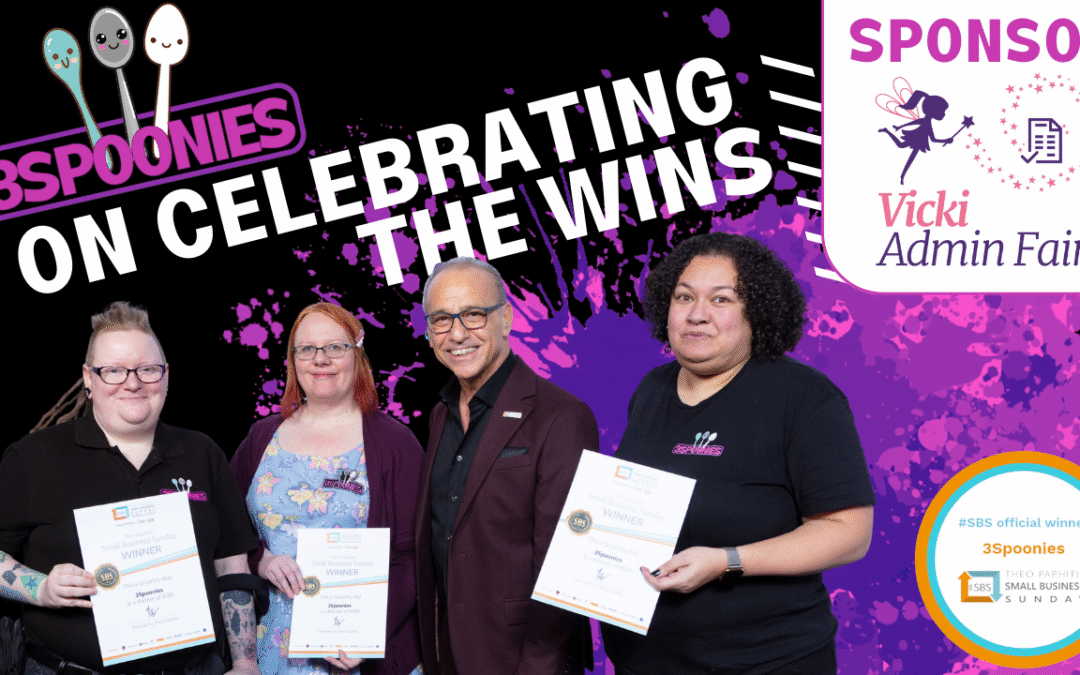
In Episode 43 of 3Spoonies, Karen, Jo, and Claire dive into the art of celebrating wins—big and small. Whether you’re navigating business, chronic illness, or both, this episode is a warm reminder that acknowledging progress helps sustain motivation, boost mood, and reduce burnout.
Here’s a recap of the key points, plus practical ideas you can use right away.
The Big Idea: Build a “Stepladder of Wins”
Not all wins look the same, and that’s okay. The hosts suggest thinking about wins in steps so you can recognise and celebrate them as they come.
- Small wins: Got out of bed. Showered. Sent that email. Finished a task you’ve been avoiding.
- Medium wins: Landed a new client. Made a difficult phone call. Went out despite low energy.
- Big wins: Completed a major project. Won an award. Hit a milestone at work or home.
The message: Every step counts—especially when you don’t have endless spoons.
Why Celebrating Matters
- Chronic illness rarely has a finish line—celebrating keeps morale up.
- You deserve acknowledgment for energy spent, not just outcomes achieved.
- Recognition boosts dopamine and motivation, especially for neurodivergent brains.
- Culture doesn’t always celebrate adult achievements—so we have to do it on purpose.
Practical Ways to Celebrate (That Actually Help)
- Small wins:
- Tick things off a list (yes, the satisfaction matters).
- Use micro-rewards: a cup of tea you love, 10 minutes of a cozy game, a short rest.
- Medium wins:
- Treat yourself: a chocolate bar, a takeaway, a chill bath with nice salts, a face mask.
- Family wins: celebrate together—dinner out or a shared activity.
- Big wins:
- Plan experiences if you can: dinner out, a show, a mini “room spa” at a hotel.
- Share with others—collaborators, clients, family—and keep celebrating for a while.
Tip: Try not to tie basic care (like showering) to rewards. That’s maintenance, not luxury.
Tools and Tactics That Help
- The Finch app (get a “burb”): Gamify your daily goals, track progress, snooze tasks, and share encouragement with friends. It’s ADHD/neurodivergent-friendly and helps break tasks down.
- Coworking/accountability: Saying your goal out loud and having someone notice when you do it can be powerful validation.
- Gaming as reward or reset: Use gentle games between tasks to reset your brain (e.g., Islanders). Just watch posture and pain levels—comfort counts.
- Planning with flexibility: Use tools you can move around (Google Calendar, Trello, pencil in a Filofax). Tasks often take longer than expected—that’s normal.
Rest Is a Win, Too
- Taking a break when you need it is success, not failure.
- Sometimes you need more recovery than planned—build in flexibility.
- On low-spoon days, doing one small thing can be a bigger achievement than a high-output day.
Don’t Downplay Your Achievements
- We often shift straight to “What’s next?”—pause and feel proud first.
- Share your wins so others can celebrate you. External validation helps.
- Remember: people don’t always see the behind-the-scenes work you did to make something happen.
Try This: A Simple Win-Celebration Plan
- Pick 3 daily “small win” tasks and one optional stretch goal.
- Decide your reward tier in advance:
- Small: nice tea, 10 minutes of a game, a quick walk, a favourite playlist.
- Medium: a treat, a bath, a film night, a takeaway.
- Big: dinner out, a show, a day off, a mini spa night.
- Share one win per week with a friend or in a community.
- Keep a “Win Log”—a simple note of what you achieved and how you marked it.
Final Takeaway
Celebrate everything—big, small, and in-between. Plan it in. Share it. Let it fuel you. And if you only had half a spoon today and used it well? That’s a win.
If you want to watch or listen to the full episode, you can find it here.
and if you’d like new episodes straight to your inbox then join our mailing list!