
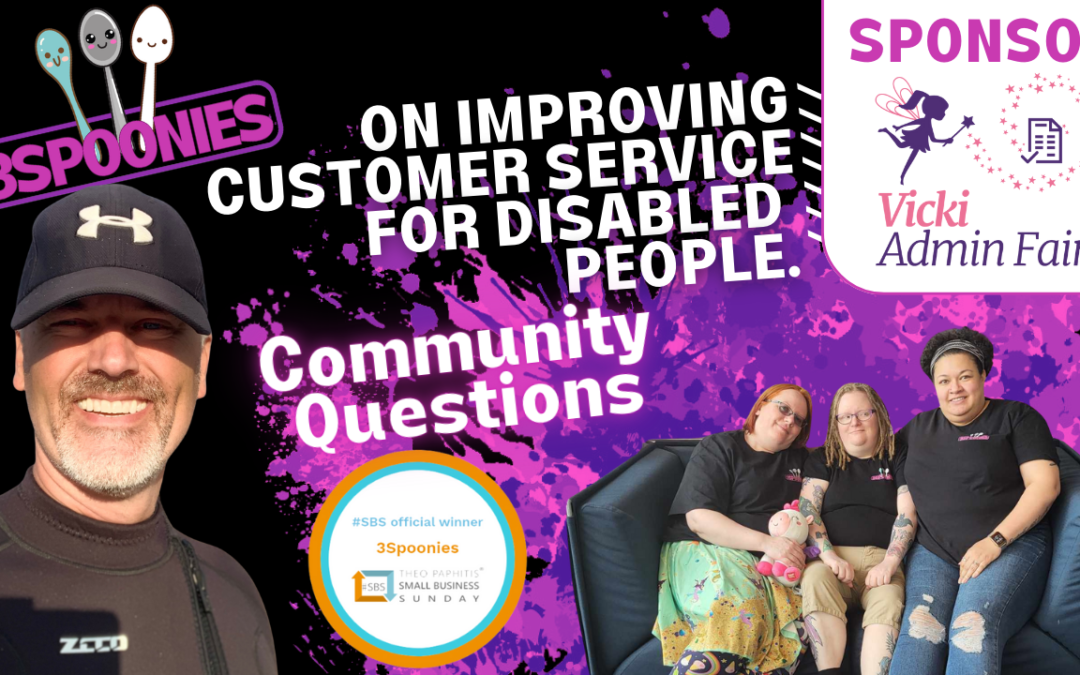
Customer service can be hard work at the best of times. Add disability, chronic illness, neurodivergence, fatigue, anxiety, pain, brain fog, or sensory overload into the mix — and suddenly “just call us” becomes a barrier instead of a solution.
In this community questions episode, we sat down with Gavin Neate to talk honestly about what accessible customer service really looks like, why it matters, and what both businesses and customers need in order to feel supported rather than stressed.
This isn’t about being perfect. It’s about being thoughtful, flexible, and human.
You can find out more about Gavin here.
Accessibility Isn’t a “Nice to Have” — It’s Essential
One of the biggest misconceptions is that accessibility is only about ramps and doorways. In reality, communication access is just as important.
For many disabled and neurodivergent people:
- Phone calls can be anxiety-inducing, physically difficult, or impossible
- Processing spoken information can be hard
- Energy limits mean long conversations are exhausting
- Brain fog can make real-time communication overwhelming
So when the only option is “call us”, that’s not neutral — it’s exclusionary.
Offering email, forms, chat, or text options isn’t extra. It’s access.
Why “Just Pick Up the Phone” Doesn’t Work for Everyone
We talked a lot about phone anxiety — and not in a flippant way.
For some people, phone calls trigger:
- Panic or shutdown
- Auditory processing issues
- Fatigue flare-ups
- Speech difficulties
- Or simply a disproportionate amount of stress
That doesn’t make someone lazy, difficult, or unprofessional. It makes them human.
Accessible customer service means understanding that different people need different methods — and that flexibility is good service, not bad service.
Multiple Contact Options = Better Service for Everyone
A big theme in this episode was choice.
When businesses offer:
- Contact forms
- Chat
- Phone
- Call-back options
They’re not just supporting disabled customers — they’re supporting:
- Parents juggling childcare
- People at work who can’t take calls
- Neurodivergent customers
- Anyone having a bad brain day
Accessibility benefits everyone. Always.
Handling Complaints Without Burning Out
We also talked about what it’s like to be on the other side — as disabled people working in customer service or running businesses.
Because let’s be honest:
- Emotional labour is labour
- Angry customers are draining
- And being disabled doesn’t make you immune to burnout
There’s a huge difference between being kind and being a doormat.
You are allowed to:
- Set boundaries
- Pause conversations
- Escalate when needed
- Protect your own energy
Accessible customer service must work both ways — for customers and staff.
Is “The Customer Is Always Right” Actually True?
Short answer? No.
Longer answer? It was never meant the way people use it now.
The original idea was about taste and preference, not behaviour.
It does not mean:
- Customers can be abusive
- Staff must accept mistreatment
- Boundaries disappear
You can deliver excellent service and hold limits.
You can be professional and protect yourself.
Those things are not opposites.
Kindness, Clarity and Boundaries Can Coexist
One of the most important takeaways from this conversation was this:
You don’t have to choose between being kind and being clear.
Good customer service for disabled people looks like:
- Clear communication
- Flexible options
- No judgement
- No pressure
- No assumptions
It’s not about special treatment.
It’s about fair access.
Why This Matters
Disabled people are customers.
Neurodivergent people are customers.
Chronically ill people are customers.
We are not edge cases.
We are not rare.
We are not “difficult”.
And when businesses design with accessibility in mind, everyone benefits.
Listen to the Full Episode
This blog only scratches the surface of what we covered in the episode — including personal experiences, practical examples, and some very honest reflections on both sides of the counter.
If you’d like to hear the full conversation, you can listen to the Customer Service for Disabled People – Community Questions episode here, on your usual podcast platform or watch on YouTube.
As always, we’re talking about real life, real bodies, real limits, and real business — without pretending everything is easy.
You can find out more about our fantastic guest, Gavin Neate here.
If you’d like all new episodes straight to our inbox then join our mailing list.