
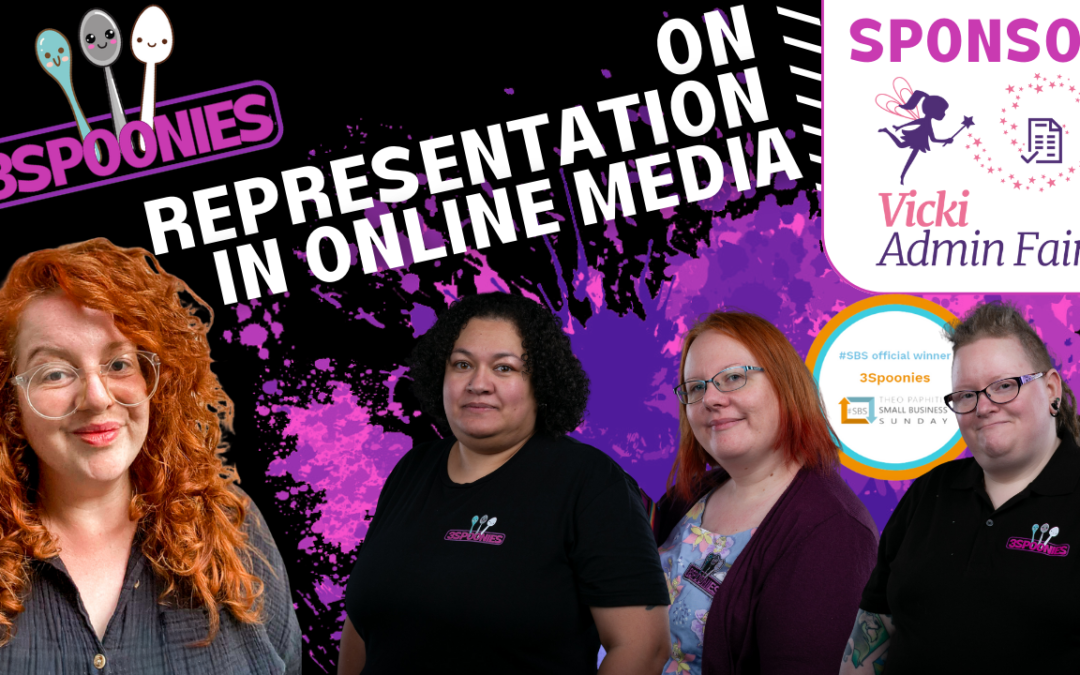
Representation matters. We all know that. But when you’re disabled, chronically ill or neurodivergent, representation isn’t just about “being seen” – it’s about being seen properly.
In this episode of 3Spoonies, we sat down with Zara to dig into the realities of disabled representation in online media. Not the glossy version. Not the “look how inspiring you are” version. The real, messy, complicated, sometimes brilliant and often frustrating truth of what it’s like to exist online as a disabled person. You can find out more about Zara here.
And honestly? There’s a lot to unpack.
The Problem With “Good” Representation
One of the biggest things we talked about is that a lot of disability representation online is technically well-meaning… but still deeply unhelpful.
You know the type:
- The “inspiration” stories
- The viral videos where disabled people are treated like motivational posters
- The “anything is possible if you just try hard enough” narratives
These don’t show real life. They don’t show fatigue, pain, admin, access barriers, brain fog, flare days, cancelled plans, or the sheer logistics of existing in a world not built for you.
They show a version of disability that is palatable to non-disabled people. And that’s not the same thing as being accurate.
Invisible Disabilities & Being Disbelieved
We also talked a lot about invisible disabilities – and the unique nonsense that comes with them online.
When your disability isn’t obvious, people feel entitled to:
- Question you
- Disbelieve you
- Accuse you of exaggerating
- Or outright tell you you’re “not really disabled”
Online spaces can make this worse. People feel braver behind a screen. And when disabled creators talk about their experiences, there’s often an assumption that they’re either lying, seeking attention, or being dramatic.
Which is exhausting. And dehumanising. And far too common.
Who Gets to Speak for Disabled People?
Another big conversation was around who gets platformed.
Because let’s be honest – disabled people are still very often spoken about rather than listened to.
We see:
- Non-disabled creators explaining disability
- Media outlets using disabled stories without disabled voices
- Panels about disability with no disabled people on them (yes, really)
Good intentions don’t replace lived experience. And awareness without inclusion is just performance.
If you’re talking about disability, disabled people should be part of that conversation. Not as tokens. Not as “inspiration”. As actual experts in their own lives.
Algorithms, Trends & Who Gets Visibility
Online visibility isn’t neutral. Algorithms decide what’s seen, what’s boosted, and what’s buried.
And unfortunately, disability content often:
- Gets suppressed
- Is flagged incorrectly
- Is deemed “too negative”
- Or simply isn’t prioritised
On top of that, trends can flatten complex experiences into soundbites. Which makes it harder to talk about nuance, fluctuation, and the reality that disability isn’t one-size-fits-all.
Some disabled creators thrive online. Many struggle to be seen at all. And that’s not because their stories aren’t valuable – it’s because platforms weren’t built with them in mind.
Authenticity vs Performance
We also explored the difference between:
- Sharing your life
and - Performing your disability for an audience
There’s pressure online to be:
- Relatable but not messy
- Honest but not “too negative”
- Real but still inspiring
And that’s a tightrope.
Disabled people are constantly balancing:
“If I show the hard stuff, will I be seen as a problem?”
“If I don’t show the hard stuff, am I being dishonest?”
That emotional labour is rarely acknowledged. But it’s always there.
When Representation Gets It Right
It’s not all doom and gloom.
There are creators, platforms and communities doing this well.
Representation works when it is:
- Led by disabled voices
- Nuanced, not stereotyped
- Allowed to be complex
- Not reduced to a single narrative
It works when disabled people are shown as:
- Whole humans
- With boring days, bad days, funny days, productive days, exhausted days
- Not just their diagnosis
It works when we’re allowed to exist without being inspirational, tragic, or educational props.
Why This Matters
Bad representation doesn’t just annoy us. It actively affects:
- How disabled people are treated
- What access we’re given
- Whether we’re believed
- Whether we feel safe showing up
And good representation?
That builds confidence, community, and change.
It tells people:
“You’re not broken.”
“You’re not alone.”
“You’re not too much.”
And honestly, that’s huge.
Final Thoughts
This episode wasn’t about calling people out. It was about calling things in.
About asking:
- Who is being centred?
- Who is being silenced?
- And who is being asked to carry the emotional load of “educating” everyone else?
If you’re disabled and navigating online spaces – we see you.
If you’re a creator – your voice matters.
If you’re an ally or business – listening is more important than performing.
And if you’ve ever thought, “Why does representation still feel so wrong?” – yeah. Same.
Listen to the full episode
This blog is based on our full conversation with Zara on the 3Spoonies Podcast, where we go much deeper into lived experience, online culture, visibility, and what meaningful representation actually looks like. You can find out more about Zara here.
You can watch or listen to the episode here or on YouTube, Spotify, Apple Podcasts and all major platforms.